Goodbye to Johannesburg, the largest city in South Africa. A city of tourism that bats its eyes at the intense wealth disparity then quickly forgets as they move on to their next pleasantry. Mercedes-Benz luxury cars, fountain drink cups rattling with change, an economic powerhouse built on the backs of gold-rush era slaves. A place where you are regarded as either brave or nefarious for being out after dark. After only being there for what felt like a moment we were off to Cape Town.
 We boarded a flight to this sister city, connected by interests of cargo and globetrotters alike. I saw out the window a drastic difference in scenery. I marveled at the verdant green shrubbery and trees amidst tall orange mountains. I stared in silence until the woman next to me, a “Joburg” native, tut-tutted at the same view. She commented in disappointment, “Nothing what it used to be.” I asked how she meant. She informed me of the crippling drought affecting the country. I was surprised, having been in the country for nearly a week, that I hadn’t heard anything. The country is in the crux of a crippling water shortage which has parched the dams and reduced water usage to 18%, still declining. This winter, the season which is typically the rainiest, has seen the driest weather in a century. The effects of this severe state of affairs will be felt nationwide for at least 3 years and much longer for the Western Cape.
After thinking about it for some time I couldn’t help but to begin to associate my ignorance of this mounting situation with my lodging. I was staying at a very nice hotel in one of the most affluent boroughs of Johannesburg. My stay was picturesque. Bottled water was free in the lounge, I was welcome to use any facility at my leisure, and I enjoyed long, hot, showers at the end of the day. I enjoyed all of this half the time without even knowing I was enjoying it. It was just what was indebted to me by virtue of my debit sitting at the concierge desk. I was blissfully unaware. Like I said, my stay was picturesque. I had managed to afford to frame myself in a world where climate did not apply to me. I wonder what it would take to force all walks of life to salvage their resources, as prosperity is hardly sustainable.
From the moment we landed I was, and enduringly am, wiped out. Our new driver for the week, Derek, picked us up from the airport. He brought us to our new temporary home, An African Villa. I knew I wouldn’t be able to fully appreciate this absolutely charming bed and breakfast at the foot of Table Mountain until I had a nice rest. However, we were told to unpack in 20 minutes and arrive back downstairs, ready to drive an hour and a half down the cape … to go to a bookstore. Now I love bookstores as much as the next guy but to say I was less than pleased at these plans was an understatement. A bookstore, now? Really?
Nevertheless, like the loyal sheep I am, I slumped back on the bus. We drove down the cape, which was breathtakingly beautiful though at the time it elicited nothing more from me than a yawn. At long last we pulled up to a small bookstore just off the harbor. The air was salty and cool. We stepped inside to what was already a packed audience. Our professor slyly smiled at us and told us to grab ourselves some complimentary wine and find a place that we’d be able to see from.
A slightly less riotous version of myself stood in the back of the room with a glass of Chardonnay. I scanned the room, gathering clues. There were two unoccupied seats in front of the crowd. So surely there would be a speaker, likely an author. However, unlike other book talks I’ve attended in the US there was no display of books from any particular author. The most perplexing detail was the crowd itself. The room was filled to the brim with middle aged to elderly white Afrikaners. This was not the demographic I had become accustomed to engaging with while in South Africa. While it may be improper to insinuate, the reality of this situation is that the population of the room was the very same population I had learned was on the opposite side of Apartheid. It took me a moment to shake off my unfounded apprehension and realize that I may have had “an in” with these people. They might as well be my grandparents had circumstances, language, culture, and just about everything else been different. I turned backwards to face the elderly couple behind me and put on my most grand-daughterly smile and asked the very specifically phrased question, “So are you looking forward to this?”
The husband answered, “Well, I actually was until a bunch of young people came in and effectively ruined my evening.”
I looked back at him apologetically. ABORT, you idiot. Thank god I hadn’t asked my real question, “So which old white guy was I dragged here to see?”
The man’s wife lightly slapped his hand and smiled back at me. “I am so looking forward because every time I’ve heard him speak he’s had such wonderful things to say about the country. The things that Professor Jansen has done for education are really astounding.”

Jansen! We were seeing Jonathan Jansen! This is the author of Knowledge in the Blood, a required text in preparation for this course. He is an esteemed professor and South African native that withstood the effects of Apartheid and has since written many books on the transformations being undergone by the country’s education system, government in general, student body, and population at large. I was delighted. Partially, because this meant I would be able to navigate this conversation with much more ease. Mostly, because I was so excited to hear more from this incredible figure, in person and in his own country. Admittedly, it also had something to do with the success of my meddling and dashing of Dr. Clarke’s plan to keep us in the dark.
This discovery began a rather interesting conversation with the couple about their lives and occupations. The woman was a founder of Training and Resources in Early Education (TREE), a non-profit organization which works to educate children in rural areas who would otherwise not have access. The man worked in a game preserve where he was taught to identify trees with his eyes closed by feeling the bark and smelling the leaves. I couldn’t resist but to ask them what their lives were like during the Apartheid era. The man resolutely stated that they fought against the government. He remembers the day a neighbor grumbled about the constant cuts in power (a common issue here) but bemoaned the fact that they, my conversation partners, never seemed to lose it at all – even on their telephone line. Shortly after he began to notice on a daily basis that the same van parked across from their house. He learned he was being watched by MOSS, an organization designed to spy on those who are known to resist government legislation. So, one morning not unlike any other, the woman made tea and the husband walked outside, knocked on the window of the van, and invited those inside to enjoy a drink with them for they had nothing to hide. The same van was not seen again afterwards.
Without any further ado, Jonathan Jansen walked out and sat before the a crowd fixed in admiration. He discussed his new book As by Fire: The End of the South African University. Following the event I bought myself a copy and had him sign it. He was in on the surprise and laughed at his chance to trick the Rutgers students. This book chronicles the aggressive reaction that universities have had as a result of the tumultuous economic, political, and social environment wrought by a country in turmoil. His discussion on the book brought up questions of justice, appropriate reaction, and institutional change that are common throughout his work. At the end of his discussion he opened the floor to questions which the crowd seemed poised to partake in. I’ll do my best to appropriately represent the opinions of Dr. Jansen and the crowd.
The involvement of students in protest has become a national issue following an unprecedented escalation in disorder. This brought about talk of any specific university’s influence on their student population. In their history, during Apartheid and otherwise, protests had not mounted to the degree of violence and disdain for social order which they have now. The elders of the community are left asking how things have gotten to this level in, what seems to them, such short notice. At the University of Cape Town, among others, there have been intense criticisms of the increasing fees and a call for nationwide “decolonization” of the curricula. In short this means that no longer do the students want to be taught the lessons which have been mandated by their oppressors but a more inclusionary view from their heroes and their heritage. This has incited a string of protests that resulted in the death of one individual on campus in the last year. Colonialism, though it has been publicly denounced, continues to affect daily life and institutions throughout the country under the guise of being the standard of higher education. This continues to marginalize histories and knowledge of various communities into the category of “other” and therefore less worthy of attention. Dr. Jansen agrees with the decolonization of South African education as, frankly, they are no longer a colony. However he fiercely opposes the loss of the right to education. A university is meant to be a stronghold for higher-thinkers. When met with such violence they no longer become a safe haven for knowledge. Riot gear has become commonplace, professors fear going to work, students fear school. This cannot happen. This is not something that can be changed by political leadership as it would require an upheaval of government as a whole.
“If you think that you can eradicate racism, you cannot.”
Institutional racism is prevalent and will remain. Institutions change remarkably slowly. The student movement – the student heart – is a powerful and effective force. However, when a protest can be twisted to represent propensities towards racism, classism, sexism, and ultimately violence then the cause is lost. Political parties that would seek to advance their own agendas take particular interest in the unrest of students and manipulate this. Diplomatically, there is great value in distraction. It’s true that learning institutions must be held accountable and must morph to the times and learners present. They cannot continue to justify themselves under the pretense of proper educational practice without continued reformation. The reality is that this does not happen overnight or even, in this case, within 30 years. Moving forward, attention must be drawn to increasing government funding because there is simply not enough. Student protests, in general, tend to be non-racist which is a meaningful example to the rest of the country. Dr. Jansen recognizes the need for such agitation, however continues to advocate for each individual’s right to education despite any circumstance. This includes circumstances which make universities an uninhabitable space by means of misconduct and scare tactics.
Jonathan Jansen’s conveyance of reflection was an honor to be witness to. In case anyone was wondering, like the entire crowd was at this event, Jonathan Jansen does not intend to run for Minister of Education in South Africa. In fact, he equated the likelihood of such an event as being as probable as finding Osama Bin Laden alive and well.


 hereafter, forced removals began. Whole families were relocated to a bleak, out-of-the-way, plot carrying all they could fit of their lives in a single suitcase. The area, their lives, their furniture and belongings were razed to the ground leaving only places of worship to survey the ruin.
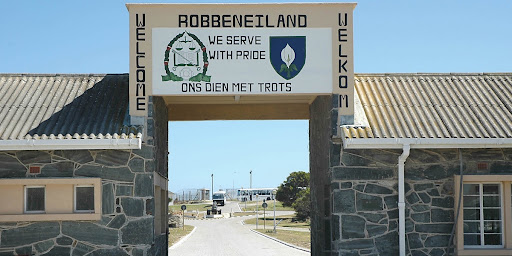


 We pulled further inland to the quarry where Nelson Mandela labored every day. Little did I know, we were looking at a major site of education. Many of the prisoners were uneducated. They learned to write by drawing letters in the sand during their work. Mandela did all he could to procure books on history and philosophy for the prisoners to study. The place has been emotionally reclaimed from a place of cruel forced labor to one of resiliency.


 In the states we are all familiar with the STEM (Science, Technology, Engineering, and Math) route. The principal of this academy jokingly offered his condolences to American education for being so far behind, as at this academy they are practicing STREAM. This stands for Science, Technology,


